A Quiet Matchday: Noticing a Ground Before Kick-Off
A quiet matchday visit reveals how sound and light shape a ground’s atmosphere. Follow a flexible observation route that fits your time and access.
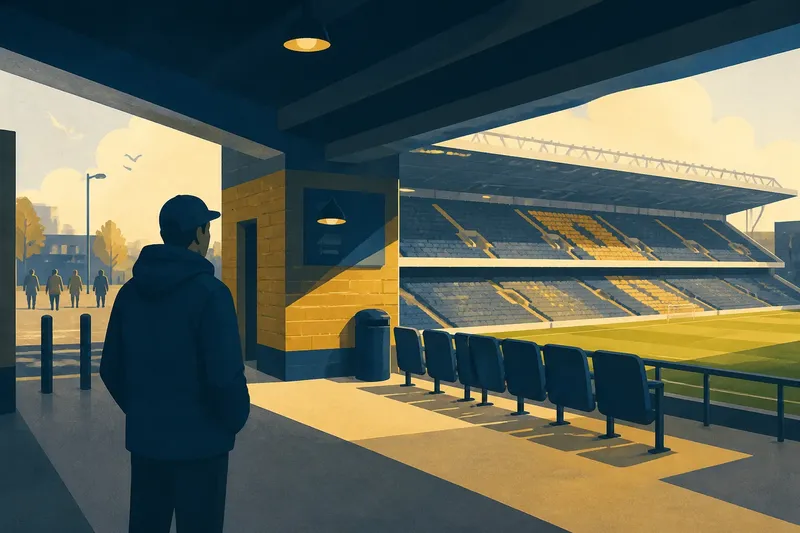
A quiet matchday visit can tell you how a ground’s atmosphere is taking shape before the stands fill: listen for changes in sound and notice where the light gathers or fades. You do not need a special tour or a long stretch of free time. Choose a route that suits your access, pause at a few useful points, and pay attention to what changes as kick-off approaches.
The aim is not to judge a venue by how loud it is while empty. A quiet concourse, a distant announcement, or a strip of sun moving across a seat can each reveal how the place will feel when spectators arrive. Treat the visit as a sequence of observations rather than a search for one perfect viewpoint.
Which pre-match route fits your visit?
Start with the conditions you actually have: when you arrive, which areas are open, how much walking is comfortable, and whether you need step-free access. Then pick one of these routes. Each works with a different kind of visit, and none requires entering a restricted area.
- If you have only a short wait: Stay near your public entrance or the nearest open concourse. Listen for the contrast between outdoor traffic, indoor conversation, and any sound carried from the pitch. A compact route is more useful than rushing across the site.
- If you arrive well before the turnstiles become busy: Walk from the approach to an open public space, then pause where the pitch or stands come into view. Note how the sound changes as walls, roofs, and seating interrupt or carry it.
- If you prefer a seated pause: Use an accessible public seating area or a designated viewing point. Observe the light on nearby surfaces and listen for announcements, staff activity, and sounds arriving from beyond your immediate area.
- If you are visiting with someone who needs a quieter environment: Choose a route with an easy exit and places to pause, and avoid treating crowd build-up as something to push through. A short visit during a calmer period may offer a better sense of the venue than staying until the entrances become congested.
- If weather is shaping your plans: Favor covered public areas and compare the sound under shelter with the sound outside it. Rain, wind, and shifting daylight can alter what you hear and where you are comfortable stopping.
For a first visit, choose the simplest route that lets you stop without blocking circulation. Your observations do not need to cover the whole ground.
Where should you pause to hear the ground?
Sound becomes easier to notice when you compare places rather than trying to identify every source. Begin outside the public entrance, where road noise, conversation, and the stadium’s exterior may overlap. Move only into spaces open to spectators, then pause again. The change between those points can be more revealing than a single loud moment.
Listen for layers: nearby voices, footsteps, a public-address announcement, music, maintenance activity, or a distant call from the field. You may hear some, none, or only fragments, depending on timing and venue operations. Notice whether a sound feels close, muffled, or spread across the space. A roof or enclosed concourse may make voices linger; an open approach may let them disperse into surrounding streets.
At a public opening onto the seating bowl, pause without blocking a doorway or aisle. Listen for the difference between the sheltered space behind you and the more open area ahead. If the pitch is visible, note whether activity there is distinct or faint. Do not enter staff-only areas or move beyond barriers to get a better listen.
Say you arrive while a crew is preparing an open concourse and a public announcement is playing. You pause near the entrance, then walk to an authorized viewing opening and hear the announcement soften while voices from the bowl become clearer. That change gives you a simple comparison: the route has shifted what carries, even though the event has not begun.
How does light change what the ground feels like?
Look for transitions, not just brightness. At an exterior approach, notice whether daylight reaches the entry or falls away beneath an overhang. Inside, look for the boundary between a bright opening and a shaded concourse. From an authorized public viewpoint, observe whether the seating bowl is evenly lit or divided into sunlit and shaded areas.
Light can guide attention without telling you what to think. A bright patch on the pitch may draw your eye forward, while a darker route makes faces and signs harder to read. Reflected light from pale walls or a polished floor can make an interior feel more open; heavy shade can make the same space seem enclosed. These are observations about the present conditions, not fixed qualities of the venue.
Compare the view from one public location with another. A covered passage may feel calm because it blocks glare, while the open bowl may feel more exposed as the sun moves. If you use a mobility aid or need to read information easily, pay attention to glare, shadow, and changes in floor brightness along your route, but follow posted access guidance and keep clear of circulation paths.
Cloud cover, artificial lighting, and the direction of the sun can change quickly. Rather than deciding that one area is always bright or dim, record what the conditions are during your visit and where you notice the strongest contrast.
What can you learn at each stop?
A useful route has a few distinct stops, each with a different purpose. The sequence below is a menu, not a demand to cover every point. Use only areas open to the public, and adapt the order to entrances and routes available on the day.
- Approach: Before entering, listen to the sounds around the site. Notice whether matchday activity is audible from the street or whether nearby traffic and public life dominate.
- Public entrance: Pause to hear how voices and announcements change as you pass from outdoors to shelter. Watch where daylight ends and artificial light begins.
- Open concourse: Find a place that does not obstruct others. Listen for echoes, footsteps, and nearby operations, then notice whether the ceiling or open sides seem to carry sound onward.
- Authorized view toward the bowl: Compare the sound and light behind you with what reaches you from the stands or field. Notice whether the view draws your attention toward the pitch or toward activity around the seating.
- Return route: As people begin to arrive, note how conversation and movement alter the same spaces. If the area becomes busy, leave the observation route and follow staff directions.
Keep each pause brief enough to leave room for others. A clear observation is more useful than standing in a doorway while trying to capture every detail.
What changes as kick-off gets closer?
Arrival is a gradual change in both sound and movement. An early visit may be marked by isolated footsteps and short announcements. As spectators come in, voices overlap, doors open more often, and the concourse’s sound becomes less distinct. A quiet interval can return between bursts of activity, so listen for shifts rather than expecting a steady rise.
Light changes on its own schedule. The sun may move behind a stand, clouds may soften the contrast, or the venue may rely more on artificial lighting as daylight fades. Those changes can coincide with the arrival of the crowd without being caused by it. Keep the two observations separate: what the light is doing, and what the people are doing.
If a public address announcement or music becomes louder, take it as one layer of the atmosphere, not a complete account of it. The quieter sounds around it may reveal how the venue functions: staff giving directions, people finding seats, or a door closing behind a wave of arrivals. Do not use staff conversations or private areas as material for observation.
When the route becomes crowded or a view is blocked, stop and move on. The point is to notice a ground, not to hold a position other spectators need.
Which questions are useful during a quiet visit?
Can you visit before the gates open?
That depends on the venue’s access arrangements, which may vary by event. Check official matchday information before setting out, and do not assume that an exterior entrance or public concourse will be available early.
What if the stadium is not quiet?
Use the same route and compare nearby sounds instead of waiting for silence. A lively concourse can still show how walls, roofs, and open passages shape what reaches you.
Can you make these observations from an accessible route?
Yes, if the venue provides a suitable public route and viewing point. Check the venue’s access information, choose places where you can pause comfortably, and avoid routes that require using stairs or entering restricted areas.
What should you note if you want to remember the visit?
Write down the location, the weather or daylight conditions, and one sound or light change you noticed. A brief note such as “announcement faded between the entrance and the bowl opening” is more useful than a general label like “loud.”
How can you adapt the route without disrupting others?
Keep your attention flexible. If a queue forms, choose another public stopping point rather than lingering beside the entrance. If an announcement directs spectators, follow it instead of continuing to observe. If you are with a group, agree on a meeting place in advance so no one has to search through busy circulation areas.
Where access rules, event arrangements, or opening times vary, follow the venue’s instructions. The ground’s public route is the limit of this observation; staff-only spaces and closed seating areas are not shortcuts.
For a low-key visit, bring only what helps you pause comfortably, such as a phone for brief notes or a small notebook. Keep devices put away while walking through crowds, and do not photograph or record people without appropriate permission. The useful record is about the space and its changing conditions.
A quiet matchday visit is most revealing when you return to one place as the sound or light changes. Choose a public spot that does not impede anyone, listen once before arrivals gather and again as the ground fills, then note what altered. That small comparison gives you a grounded sense of atmosphere before kick-off without mistaking one passing moment for the whole venue.