Open Bowl or Enclosed Stand: Two Ways to Shape a View
Compare open-bowl and enclosed-stand stadium views to see how roof edges, sightlines, and the skyline shape what spectators notice from their seats.
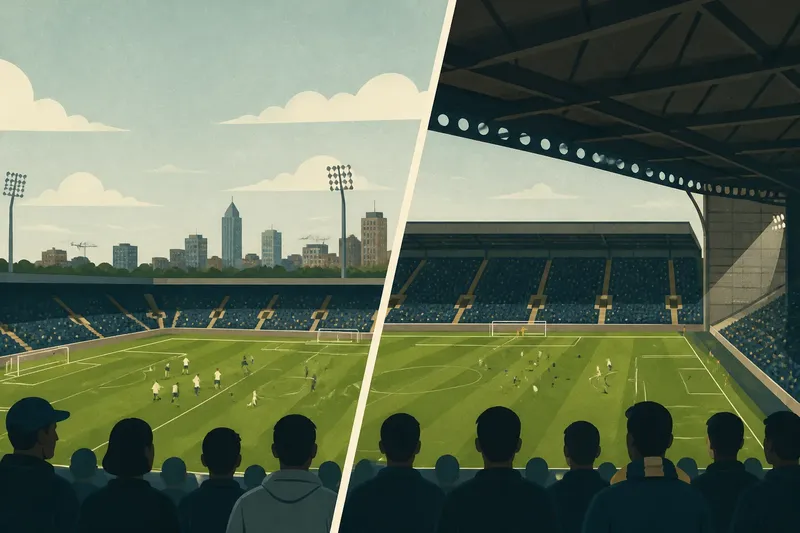
An open-bowl stadium lets the skyline share the view; an enclosed stand directs attention back toward the pitch. That difference shapes how spectators read the game and their surroundings, even when both designs provide a clear view of the field. Comparing the two starts with the frame each creates around the pitch.
What makes a stadium feel open or enclosed?
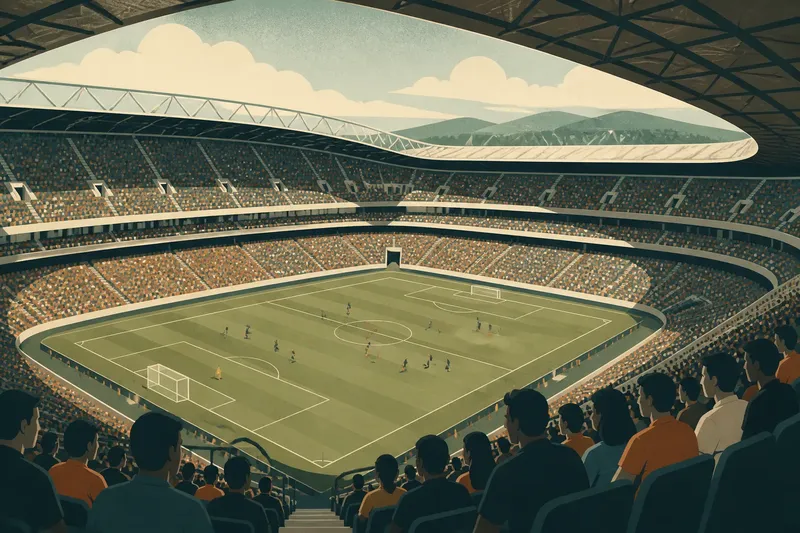
An open bowl usually has stands arranged around the pitch with limited visual barriers between seating and the outside. The upper edge may leave a broad band of sky visible, and gaps between roof sections can reveal buildings, hills, or other features beyond the ground.
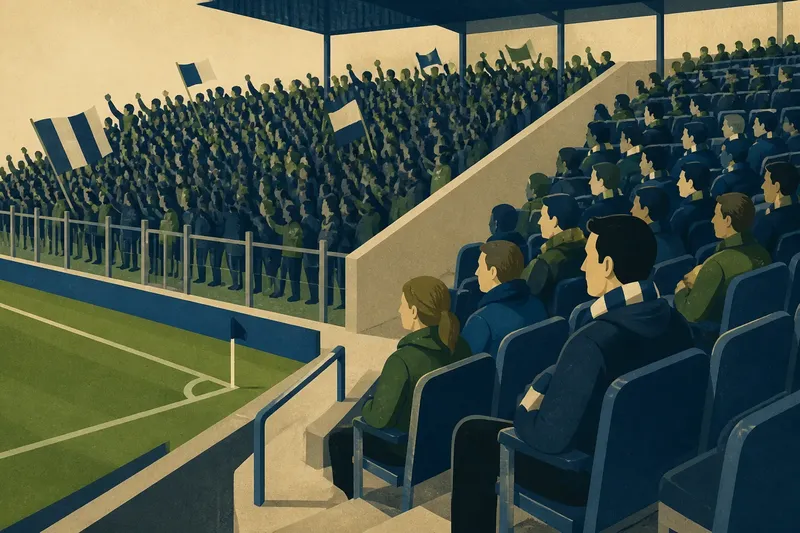
An enclosed stand brings more of the stadium’s structure into the field of view. A deep roof, continuous fascia, or substantial end walls can form a visual boundary above and beside the pitch. “Enclosed” does not necessarily mean fully roofed or sealed; it describes how strongly the architecture contains the spectator’s view.
These are not rigid categories. A stadium can have an open end and a covered main stand, or a roof that shelters spectators while leaving the horizon visible. The useful question is not simply which type a venue is, but where its visual boundaries fall from a particular seat.
How does an open bowl frame the pitch?
In an open bowl, the pitch sits within a larger field of view. The stands still provide a clear visual focus, but the eye can travel beyond them to the sky and the landscape. That makes the match feel connected to its setting rather than sealed inside a single architectural object.
The effect changes with the stadium’s surroundings. A stand facing a distinctive skyline may turn a distant cluster of buildings into a recognizable part of the matchday scene. A venue on an exposed site may give spectators a wide view of cloud, weather, or the open horizon. Where the outside contains few notable features, the same opening may register mainly as extra sky.
That added context can also compete with the pitch. A bright patch of sky, a moving crane, or a prominent building may draw the eye away from play, especially from seats where the view extends above the opposite stand. This is not automatically a flaw: some spectators enjoy the sense of place. But it is a choice about what shares attention with the game.
When assessing an open bowl, look from the seats themselves, not only from the concourse or an exterior photograph. The view from one side can include a skyline while the other faces a blank service wall or a nearby structure.
What does an enclosed stand add to the view?
An enclosed stand can make the pitch feel like the deliberate center of a composition. Roof soffits, side walls, and the opposite stand create a more contained visual field, limiting the distractions beyond the stadium. The architecture frames the match much as a border frames an image: it helps establish where attention should settle.
A continuous roof edge can also give the upper part of the view a consistent boundary. Instead of an irregular slice of skyline, spectators see a defined line above the opposite stand. That line may make the pitch and seating bowl feel cohesive, particularly when the roof geometry follows the curve or angles of the stands.
Containment has trade-offs. A deep roof or enclosed end can obscure distant landmarks and make the venue feel visually separate from its surroundings. From some seats, the roof underside may occupy a large part of the view; from others, a gap between roof sections may still offer a glimpse outside. The design’s effect depends on the seat’s angle, height, and position relative to structural supports.
Think of enclosure as editing rather than simply closing a view. It removes some outside elements, but the edges it leaves visible become more noticeable.
How do roof edges and skyline change what you notice?
The roof edge is often the point where the two approaches meet. A shallow canopy can protect the nearest rows while leaving the horizon broad and visible. A deeper roof can create a stronger frame, but it may conceal more of the sky or a landmark beyond the far stand.
The skyline itself is not a fixed backdrop from every seat. Its visibility depends on the direction spectators face and on what lies between the seating and the horizon. A landmark may appear above one stand but disappear behind a roof fascia from another section. Even a small shift in viewing angle can change whether the outside feels like a clear feature or a narrow sliver.
Imagine a proposed ground beside a riverfront district. In an open-bowl design, a spectator facing the far goal might see the roofline of nearby buildings above the stand. In a more enclosed design, a deeper canopy might hide those buildings and make the pitch the dominant view; the observable difference would be the amount of skyline visible from the same seating position, not a claim that one design is universally better.
For a real venue, compare drawings or seat views from several points: behind each goal, along both touchlines, and near the corners. A single attractive rendering can conceal how unevenly the skyline appears around the bowl.
Which view should a spectator expect from a seat?
Can an open bowl still have covered seating?
Yes. A roof can cover seats without closing the view beyond the stadium. Check whether the canopy blocks the skyline from the specific section you are considering, rather than assuming that “open” means uncovered.
Does an enclosed stand always hide the surroundings?
No. Open corners, gaps above the opposite stand, and breaks between roof sections can preserve outward views. The amount of visible skyline varies across the seating plan.
Why do corner seats show a different frame?
A corner seat looks across the pitch at an angle, so it may catch a landmark beyond one end while a seat on the touchline does not. Structural columns and roof edges can also interrupt the view differently from that position.
What should I check in a stadium seating view?
Look for the roof underside, the top edge of the opposite stand, and any visible sky or landmarks. If the view is a rendering, treat it as an illustration and check whether it matches the actual section and row.
How can a design preserve both focus and setting?
Designers do not have to choose between a fully exposed bowl and a completely contained stand. Roof depth can vary around the venue, corners can remain visually open, and openings can be aligned with a meaningful view beyond the ground. These choices can give the pitch a strong frame while allowing selected parts of the skyline to remain present.
The important distinction is between a deliberate opening and an accidental gap. A purposeful view can make the stadium feel tied to its location; a poorly considered interruption may put a distracting object directly in a spectator’s line of sight. The surrounding buildings, terrain, and likely seat angles all matter when deciding what to reveal.
For spectators comparing tickets, the same principle offers a practical way to choose: decide whether you would rather have a contained view centered on play or a broader view that includes the stadium’s surroundings. Then inspect the seating position, not just the venue’s general label. An open bowl or enclosed stand matters most at the exact point where your eyes meet the pitch, roof edge, and skyline.