From Terraces to All-Seater Grounds: A Stadium Shift
Terraces to all-seater stadiums changed how crowds gathered, moved, and watched. See what seating altered—and what the ground lost or gained.
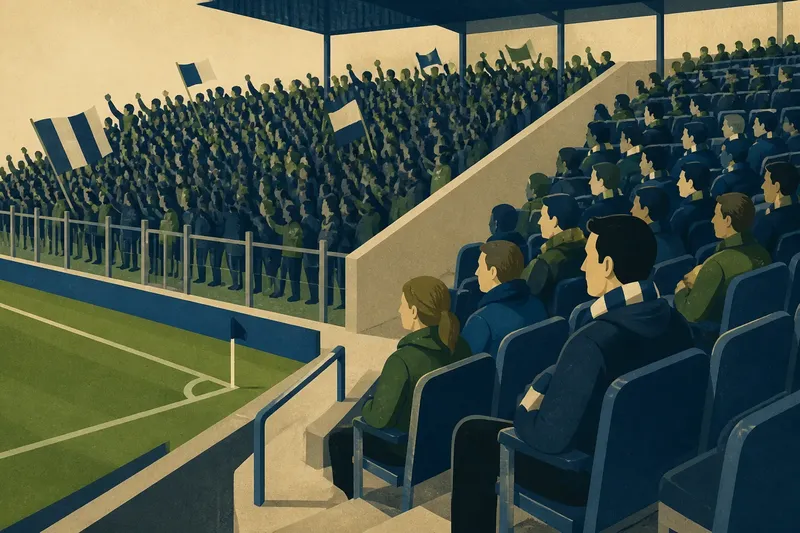
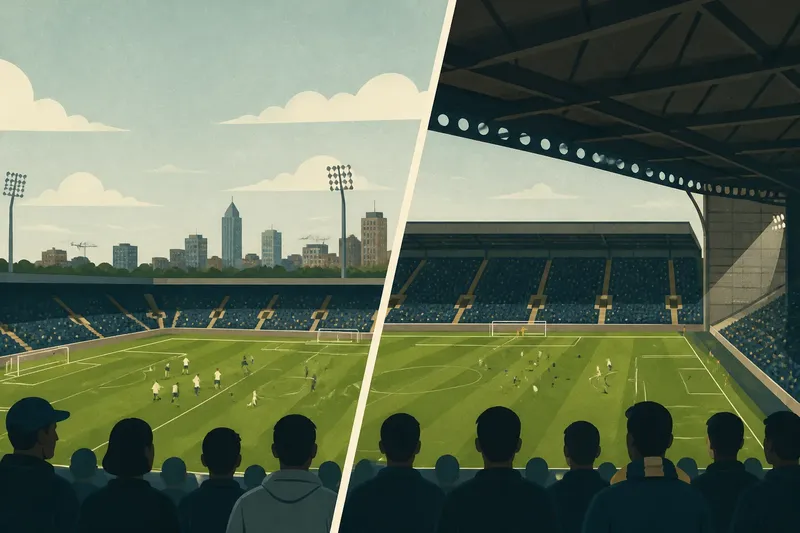
Terraces to all-seater stadiums changed more than where spectators stood: they reshaped how crowds occupied space and related to the pitch. On a terrace, people gathered in a shared standing area; in an all-seater ground, each spectator received an assigned place within a more clearly divided arrangement.
That shift was gradual and varied by place, club, and era. It reflected changing expectations about crowd management, comfort, access, and the role of the stadium as a public venue. Understanding it means looking beyond seats themselves to the patterns of movement and collective behavior each layout made possible.
Why did stadiums move from terraces to seats?
Standing terraces were a familiar way to accommodate large crowds. They used sloped banks, steps, barriers, and access points to hold spectators along the touchline and behind the goals. Fans could choose where to stand within an area, and the crowd’s density shifted as people arrived, moved, and reacted to play.
Over time, many stadium operators and authorities came to favor layouts that assigned each spectator a particular place. Seated sections offered a more legible arrangement: rows and aisles divided the audience, while tickets could identify both a section and a seat. The change aligned with wider efforts to manage entry, circulation, and spectator safety, though a seat by itself could not address every operational concern.
The transition was not simply a design preference. Public expectations about comfort and venue use changed, and clubs faced pressure to make grounds suitable for a broader mix of events and visitors. A stadium increasingly had to function as a managed venue, not only as a place where a crowd assembled for a match.
What was a terrace like for spectators?
A terrace was a standing area, often arranged in stepped rows, where spectators watched shoulder to shoulder. Depending on the ground, barriers divided the space into sections and helped organize movement. The terrace offered less individual separation than a seated stand, but it also allowed people to adjust their position within the area as conditions changed.
That flexibility shaped how a crowd experienced the match. Supporters could cluster with friends, shift to make room, or respond collectively to a dramatic moment. Chants and gestures traveled through a mass of people whose physical proximity made the crowd itself an immediate part of the spectacle.
Terraces also demanded attention to how people entered and moved through the space. A spectator arriving late might have to find a place in a densely occupied section, and a person’s view could depend on those standing ahead. Barriers, entrances, and the way sections were divided all affected whether a terrace felt orderly or difficult to use.
How did seats change the matchday experience?
Seats gave spectators a defined place and made it easier to remain in the same position throughout a match. For many visitors, that brought a more predictable viewing experience and a clear destination inside the stand. It also reduced the need to negotiate for standing room within the section.
In an all-seater layout, the audience is arranged in rows, with aisles and access routes separating groups of seats. This can make movement easier to understand, but it changes the crowd’s physical relationship. People are less likely to shift collectively across an open area, and the assigned seat encourages a more individual way of occupying the ground.
The difference can be subtle during quiet passages and pronounced during moments of excitement. In a seated stand, spectators may rise, sit, or gesture in response to play, but the seat remains the organizing unit. The crowd still reacts together; the architecture gives that reaction a more segmented form.
Did all-seater grounds end standing support?
No. Standing support continued in various forms, depending on local rules and how clubs arranged their grounds. Some seated areas are used by spectators who stand for much of a match, while other venues have introduced designated standing arrangements designed around specific operational requirements.
That distinction matters: a seat in the building does not necessarily mean that every spectator remains seated at all times. It does mean that the space has been planned and ticketed around seats, which affects capacity management, aisle access, and the way supporters gather. Where standing is permitted or provided, its boundaries and conditions depend on the venue and local rules.
Imagine a club converting one end of a terrace into rows of seats while keeping a separate area for supporters who prefer to stand. The expected observable change would be clearer individual places in the seated section, while coordinated singing could continue across both areas. The example shows why the shift is better understood as a change in how support is organized than as the disappearance of collective behavior.
How did the shift affect the relationship between crowd and ground?
Terraces made the crowd’s collective presence a prominent feature of the stadium. A standing section could feel like one continuous body of spectators, with movement and sound spreading through people in close proximity. The crowd did not merely occupy the ground; its density and shared responses helped define the atmosphere within it.
Seating made the ground more explicitly divided into individual places and managed zones. Sections, rows, and seat assignments gave spectators a clearer relationship to their own location. This could make entry and wayfinding more structured, while also making the audience appear less like a single mass and more like a set of organized groups.
Neither arrangement determines atmosphere on its own. A seated crowd can sing, react loudly, and create a strong sense of solidarity. A terrace can feel subdued if the people in it are not engaged. Design supplies conditions for gathering; supporters, match context, and traditions shape what happens within them.
What changed in stadium operations?
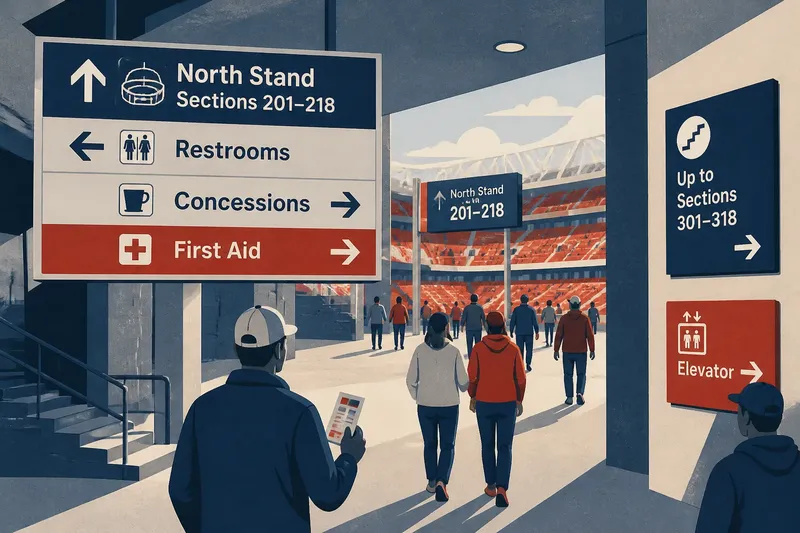
Moving from terraces to seats changed the work involved in ticketing and managing spectators. A standing section was commonly organized by area, while a seated section could assign people to rows and individual places. That made a ticket a more precise guide to where a spectator was expected to go.
Staff and visitors also had to adapt to a different pattern of circulation. In a seated stand, aisles connect rows to entrances, and spectators may need to pass others to reach a place. In a terrace, movement occurs across a shared standing area, shaped by barriers and the amount of space available. Each layout presents its own demands for access, stewarding, and crowd flow.
Conversion could also mean more than placing seats on existing steps. The stand’s entrances, internal routes, and ticketing plan might need to work together as a new system. The appropriate design depends on the structure, operator guidance, and local requirements, so changes to a ground are matters for qualified stadium professionals rather than improvised alterations.
Which questions help explain the change?
Were standing terraces always unsafe?
No single description fits every terrace or every period. Conditions varied with design, maintenance, crowd management, and the way spectators used the space. The broad move toward seating reflected a desire for more controlled arrangements, but no layout can be judged apart from how it is operated.
Did seats make every spectator’s view better?
Seats provided a fixed place, but they did not automatically ensure a clear view. Sightlines still depend on the stand’s geometry and the position of other spectators. A seated layout changes how people are arranged; the quality of the view remains a design question.
Why do spectators sometimes stand in seated sections?
People may stand in response to play, to sing, or because others in front of them have stood. That can temporarily change the experience for spectators behind them, even where every place is a seat. The behavior reflects the social life of a crowd, not a return to the spatial design of a terrace.
Can a modern ground include both seating and standing?
Some grounds provide different arrangements in different sections, subject to the venue’s design and applicable rules. The important distinction is whether an area is planned and managed for its intended use. A club’s published information is the best place to check what a particular stand permits.
What did stadiums gain and lose?
All-seater layouts brought a more individualized and organized way to attend a match. Spectators could look for a specific place, and operators could plan the stand around defined rows and routes. For visitors who value a predictable seat, that change may make the experience easier to approach.
What became less common was the open-ended movement of a crowd within a standing section. The terrace’s flexible gathering space gave way to fixed places, and the architecture made personal boundaries more visible. Some supporters miss the sense of a crowd moving as one; others value the comfort and clarity associated with a seat.
The most useful way to read this history is to notice how each layout invites a different kind of participation. A terrace gathered people into a shared standing field; all-seater grounds arranged them into individual places within a managed whole. The shift did not remove the crowd from the stadium. It changed the space through which the crowd becomes a crowd.
When you visit a ground, compare the way people enter, settle, stand, and respond in different sections. Those ordinary movements reveal the lasting change from terraces to all-seater stadiums more clearly than the seats alone.